

How To Do A Custom Install Of Windows 10
I've been currently assisting with onboarding at my new Full Time Contractor position at Microsoft. All of the new FTCs received laptops and needed to have the newest build of Windows 10 installed. The upshot was that all of our laptops came with Windows 10 Professional and we needed to upgrade them to Enterprise edition.
Later on finding a working central for Enterprise Edition, we were still having issues joining the MS Azure domain so that we could get all of the needed software properly to beingness onboarding with Microsoft.
So, after going through a couple of re-images of my laptop with some failures attached to that, I finally was able to get the process downwards so that time would non be waisted for the oncoming new hires one time they received their laptop. The issue was getting the right build of Windows 10 and getting the proper apps installed in an efficient manner. Since the onboarding procedure was quickly moving, I needed to detect a mode to help streamline the process so the others would not accept to go through all the mess I went through to get everything setup.
So, I began looking for a manner to create a customized ISO for the build that would already have apps, settings, and customizations installed. I plant this great article that details the process. I wanted to re-postal service this article here showing the steps I took to create the customized image past creating a VM in Hyper-V and then converting that completed image to an ISO that could exist downloaded and utilized for the installation.
Creating a customized ISO prototype with pre-installed software and no user accounts
- A generalized ISO image without whatever pre-set user accounts, with pre-installed software, desktop, File Explorer and Start customizations will be created.
- All customizations and personalization volition automatically be applied to all new user accounts
- Clean install will perform a normal OOBE, asking for regional settings, initial user then on
- This ISO will be generalized pregnant information technology is hardware independent and can be used to install Windows on any computer capable of running Windows 10, regardless if the machine is a legacy BIOS car with MBR partitioning, or a UEFI machine with GPT sectionalization
- The ISO prototype will be bootable on both BIOS / MBR and UEFI / GPT systems
Annotation: This post will show how to utilize a virtual car to create the ISO. All virtual machine references and instructions in this tutorial apply to Hyper-V, bachelor in Windows x PRO, Teaching and Enterprise editions. Oracle VirtualBox and VMware users might need to consult their preferred virtualization platform'southward documentation if instructions can't be used as is.
Everything in this pedagogy can exist made in each edition of Windows ten (in Home and Single Language editions using a third political party virtualization platform) with native Windows tools and programs, apart from Windows Deployment and Imaging Tools, part of Windows 10 Assessment and Deployment Kit (ADK) needed later in the post. The ADK is a free native Microsoft tool, downloadable directly from Microsoft.
If you will do this on a Hyper-V virtual automobile (which is the recommended method), make certain to ready the new virtual motorcar to utilise Standard Checkpoints instead of default Product Checkpoints. You tin practice this in virtual motorcar's settings:
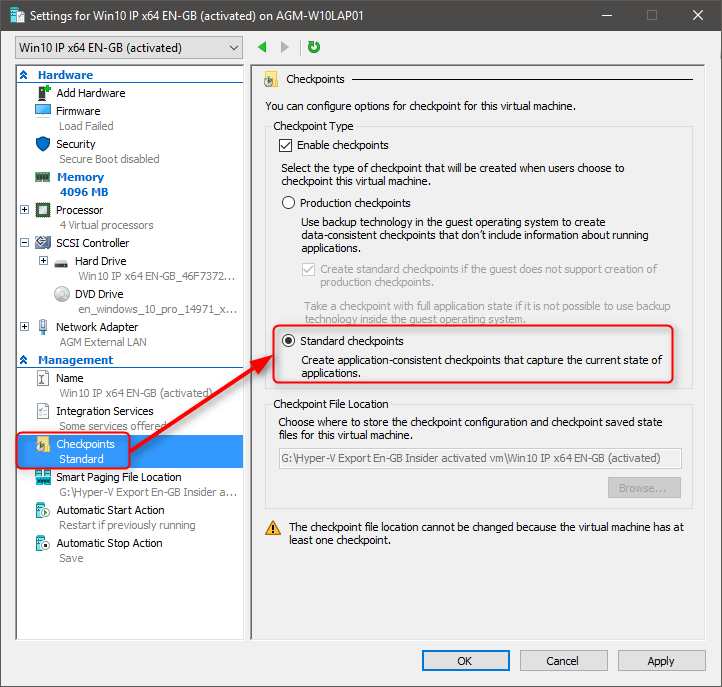
Virtual motorcar generation is irrelevant, you tin can apply Generation one or 2 equally you wish
This method will produce an ISO image which can exist compared to any original Windows x ISO y'all download from Microsoft, apart from the fact that it already contains pre-installed software co-ordinate to your pick. It will besides contain a customized and personalized default user profile, the base Windows uses whenever a new user profile volition be created.
A customized default user profile means that whenever a new user account is created, all customizations (Offset tiles, File Explorer & desktop icon and view settings, colors, wallpaper, theme, screensaver and and so on will be applied to new user profile instead of Windows defaults.
Installation using this ISO will take somewhat longer than using a standard ISO because it not but contains total Windows setup, only as well the pre-installed software. Notice that depending on how much space pre-installed software takes, you might not be able to burn this ISO to a standard 4.7 GB DVD deejay only have to apply a dual layer deejay or a USB flash bulldoze instead. My customized image came out to be about 8.5 GB in size.
The ISO created will include no user profile folders, personal user data and files.
This ISO paradigm can be used on any hardware setup capable of running Windows and can be shared, subject to people you share the ISO with have valid licenses and / or activation keys for both Windows x and pre-installed software.
System Preparation Procedure
- Download the Windows ISO Installation tool from Microsoft
- Use this TOOL to download the ISO and create the installation media
- Install Windows 10 on your VM using the downloaded ISO
Annotation: The normal Windows Download from the link above will download Windows ten Professional person. Yous will demand a primal for the installation to upgrade to Enterprise Edition and you lot volition need to be able to activate the copy of Windows to exist able to save the customizations you create for your ISO.
- Kicking into Windows 10 and do the following:
- Activate the Windows Edition your are installing with your cardinal. You will require internet connectivity. I needed Enterprise Edition and then I changed the Product Key In Settings to upgrade information technology from Professional.
- Install your preferred software, customize and personalize Windows, remove / add Start tiles every bit you wish, and set your preferred grouping policies (group policies non available in Home and Single Language editions). Practice not run whatsoever program you install!
- Update all software and run Windows Update to get all the latest updates for the prototype.
- Observe that software installed now will be included in ISO install media, and will be pre-installed for all users on each computer you install Windows to using this custom ISO.
NOTE: If Windows on your reference machine is not activated, you cannot personalize it. In this case y'all need to modify Windows theme (wallpaper, screensaver, colors, sounds) as y'all wish on some other, activated Windows 10 machine, salvage the theme as a theme file, copy it to inactivated reference machine and apply (double click).
Also notice that Edge equally well as other UWP apps practice not work when signed in to built-in admin business relationship. If you demand a browser to download software you have to use a tertiary political party browser or Internet Explorer. IE can exist started from Run dialog by typing iexplore and clicking OK.
- Open an elevated command prompt and enter the following:
| % windir % \ system32 \ sysprep \ sysprep . exe /audit /reboot |
Windows will at present restart in Audit Mode using built-in administrator business relationship. Y'all volition meet a Sysprep prompt in the eye of display:
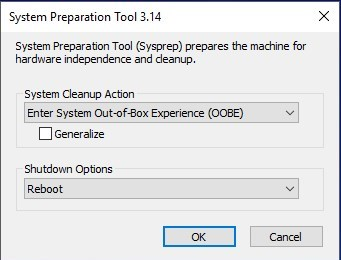
Leave information technology open for now
- Open Notepad, paste the following code to information technology, make the necessary changes to customize the installation, and save information technology every bit
File name: unattend.xml (exactly this proper noun!)
Salvage as type: All files (important!)
Salvage in binder: C:\Windows\System32\Sysprep
| i two 3 iv 5 6 7 8 9 x 11 12 13 14 15 xvi 17 18 19 | <? xml version="1.0" encoding="utf-8" ?> < unattend xmlns="urn:schemas-microsoft-com:unattend" > < settings laissez passer="specialize" > < component name="Microsoft-Windows-Shell-Setup" processorArchitecture="amd64" publicKeyToken="31bf3856ad364e35" language="neutral" versionScope="nonSxS" xmlns : wcm="http://schemas.microsoft.com/WMIConfig/2002/State" xmlns : xsi="http://world wide web.w3.org/2001/XMLSchema-instance" > < CopyProfile > true </CopyProfile > </component > < component name="Microsoft-Windows-Setup" processorArchitecture="amd64" publicKeyToken="31bf3856ad364e35" language="neutral" versionScope="nonSxS" xmlns : wcm="http://schemas.microsoft.com/WMIConfig/2002/Land" xmlns : xsi="http://world wide web.w3.org/2001/XMLSchema-case" > < UserData > < AcceptEula > true </AcceptEula > < FullName > Your Full Proper noun </FullName > < Organization > Your Organisation Proper noun </System > < ProductKey > < Key > Your 25 Digit Production Key in format XXXXX-XXXXX-XXXXX-XXXXX-XXXXX </Key > < WillShowUI > Never </WillShowUI > </ProductKey > </UserData > </component > </settings > </unattend > |
- When Sysprepping with the Generalize switch, which we will soon do, the component CopyProfile beingness set to be TRUE in answer file has a small upshot or rather a small inconvenience: information technology leaves the last used user folders and recent files of built-in admin to stop user's Quick Admission in File Explorer.
- To set this, we need to reset Quick Access to default whenever a new user signs in first fourth dimension. It requires the demand to run a pocket-size batch file at showtime logon of new user, and then remove the batch file itself from user's %appdata% so Quick Admission volition not be reset on whatsoever subsequent logon.
- To do this, open an elevated (Run every bit ambassador) Notepad (Notepad must be elevated to relieve in arrangement folders), paste the following code to information technology, salvage it equally:
File proper noun: RunOnce.bat (or any name you prefer, with extension .bat)
Save equally type: All files (important!)
Save File in folder: %appdata%\Microsoft\Windows\Kickoff Menu\Programs\Startup
| echo Y | del % appdata % \ microsoft \ windows \ recent \ automaticdestinations \* del % 0 |
- Delete all existing user accounts and their user profile data (Selection One in this tutorial)
- You are currently signed in using Windows built-in administrator account. In File Explorer, open up C:\Users\Administrator folder and bank check that all user folders are empty deleting all possibly plant content
- Run Deejay Clean-up, selecting and removing everything possible (tutorial)
- When the disk has been cleaned, create a checkpoint of the VM from Hyper-V Manager. Right Click VM > Click Checkpoint
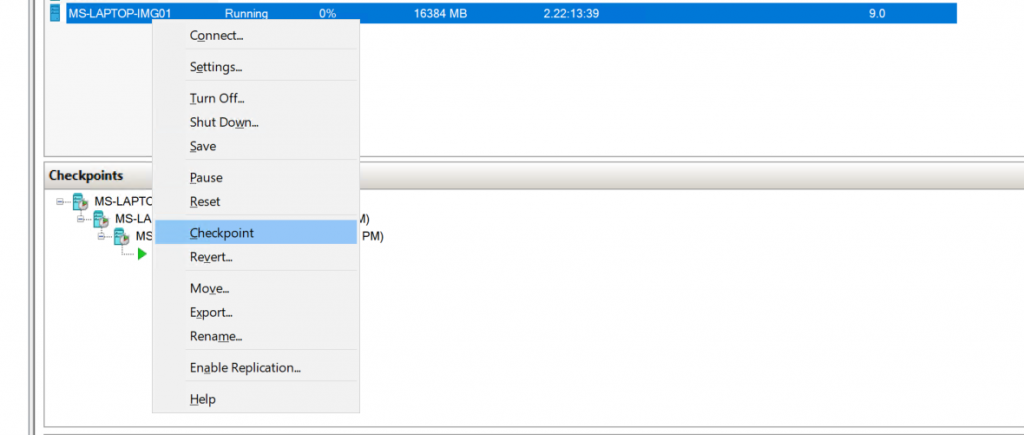
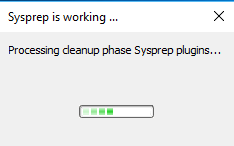
- In Sysprep dialog notwithstanding open on your desktop, select Arrangement Cleanup Action: Enter System Out-of-Box Feel (OOBE), select Shutdown Options: Shutdown, select (tick the box) Generalize, click OK:
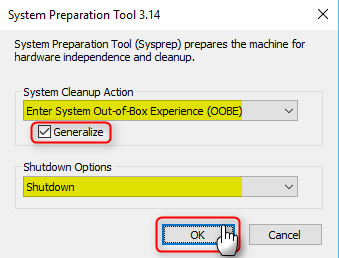
Sysprep volition now ready Windows, shutting down machine when done. Leave THE VM OFF AND DO Non RESTART IT! Now, nosotros continue to the Image Creation section.
Epitome Creation Process
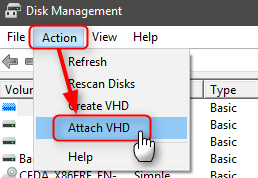
- On your Hyper-Five Host machine, open Disk Direction
- Select Attach VHD from Action carte du jour:
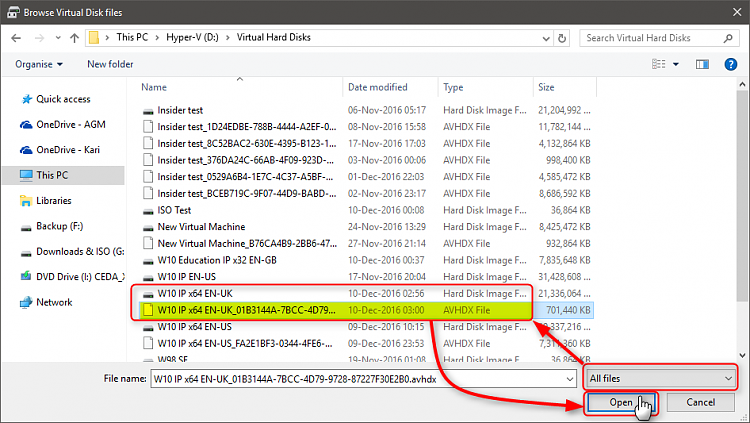
- Scan to and select your reference virtual automobile's VHD / VHDX file. If you lot accept any checkpoints (AVHD / AVHDX files) created on this vm, select the 1 with almost contempo fourth dimension postage. Note that you have to select show all files to exist able to see checkpoint AVHD / AVHDX files:
- Select the check box labeled Read-only (this is very important!), then click OK:
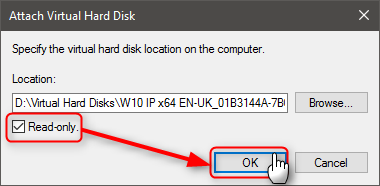
Of import: Forgetting to select Read-only will specially when mounting a checkpoint AVHD / AVHDX file make information technology unusable for Hyper-5! You lot volition NOT exist able to boot your VM and could decadent it should y'all accept write access on the mounted VHDX file.
Windows mounts the virtual hd, and all of its partitions, as carve up disk. In case of an MBR disk it even mounts the system reserved division.

NOTE: In the to a higher place picture the Windows organisation partition for the reference VM is drive K:
- Open the Windows system partition VHD to be certain that'south the 1 where Windows is installed, note the drive letter your host assigned to it.
- Open an elevated Command Prompt, enter the following command to create a new install.wim file:
| dism /capture-image /imagefile : D : \ install . wim /capturedir : K : \ /name : "AnyName" /compress : maximum /checkintegrity /verify /bootable |
NOTE: D:\install.wim path in this case is the drive and directory where you want to save the image file. G:\ path is the capture path with subfolders of the drive you want to image FROM
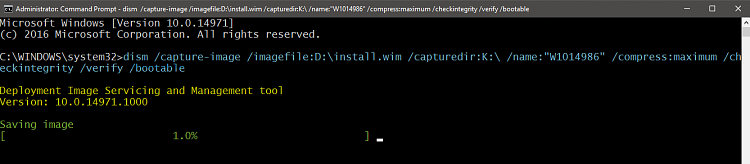
NOTE: The proper name given in /name switch in above control is irrelevant as we will proper noun the ISO after on, but is needed for the command to run. Use whatever name you desire to for the switch parameter.
The epitome process volition take time, go get something to eat as I did. On my loftier end Hyper-Five server this takes over 20 minutes, the first half of it without showing any progress indicator whatsoever. DISM works somewhat faster if you don't apply optional switches /checkintegrity and /verify but it is not recommended that you to create install.wim without checking its integrity and verifying it.
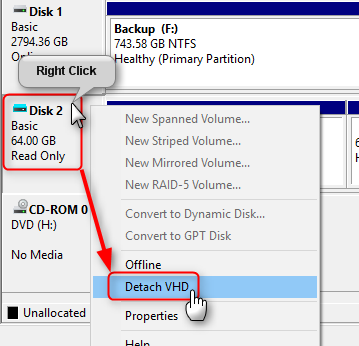
- When completed capturing the image, detach the VHD / VHDX or AVHD / AVHDX file from host by right clicking information technology in Deejay Management and selecting Detach VHD:
ISO Image Cosmos Procedure
- Mount the original Windows 10 ISO y'all downloaded in the showtime step to a Virtuial Drive on your Hyper-V Server Host.
- Copy its contents (everything) to a folder you lot create on one of your Hyper-V host's hard disks:
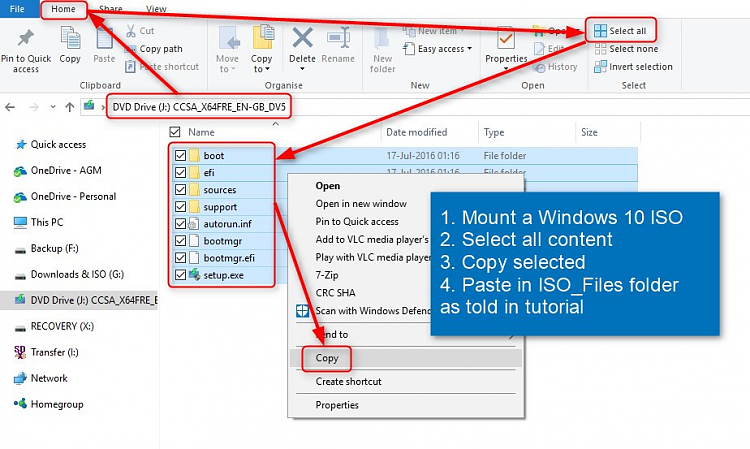
I named the folder ISO_Files and placed it on the D: drive where I had created the image from the previous section. Alternatively, you tin can re-create the contents of a created Windows 10 install USB or DVD to the ISO_Files folder.
- Browse to your custom install.wim created before in previous section. Copy it to Sources folder under the ISO_Files folder, replacing the original install.wim in that directory:
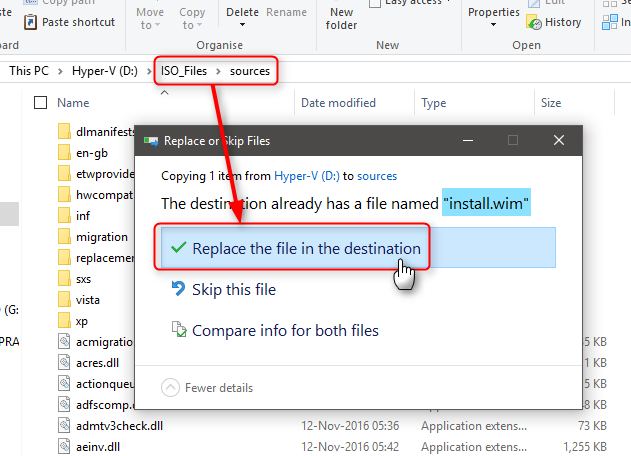

Of import: If the ISO you used when copying the files to the ISO_Files binder has been made with Windows Media Creation Tool, the ISO_Files\Sources folder contains an install.esd file instead of install.wim.
In this case you will naturally non get "File exists" prompt. Simply delete the install.esd file and paste your custom install.wim to supplant it. This volition help reduce the overall size of the ISO and not confuse the installation process when ran.
- Now, we download the latest Windows Assessment and Deployment Kit(ADK)for Windows ten: Windows ADK downloads – Windows Hardware Dev Heart
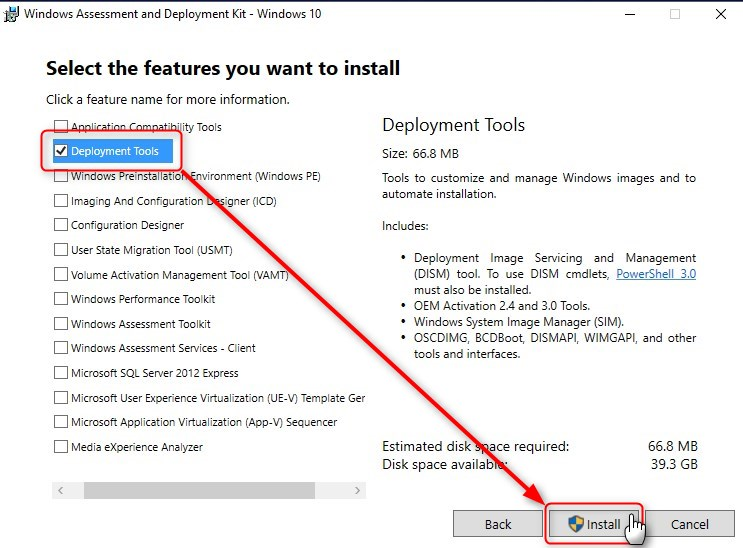
The total download for the ADK is about 7.5 GB but luckily we only need the Deployment Tools portion. So, unselect everything else except Deployment Tools and click Install:
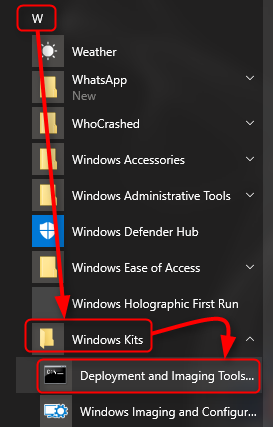
- Once completed, yous should have a folder within your start menu for the ADK Tools Installation under the folder Windows Kits. Start the Depl oyment and Imaging Tools interface program by Running the Program as an Administrator:
- At the control prompt, type cd\ to bring your prompt to the root of the folder path yous are on.
- Blazon the following command to initiate creation of the ISO prototype file:
| oscdimg . exe -m -o -u2 -udfver102 -bootdata : ii #p0,e,bd:\iso_files\kick\etfsboot.com#pEF,due east,bd:\iso_files\efi\microsoft\boot\efisys.bin d:\iso_files d:\14986PROx64.iso |
Replace three instances of d:\iso_files with the path to the ISO_Files folder where you copied Windows installation files. Notice that this is non a typo: first 2 of these instances are typed every bit argument for switch -b without a space in between the switch and argument. This is to tell the oscdimg command where to find boot files to be added to ISO.
Supersede d:\14986PROx64.iso with the path where you want to store the ISO image. This is where you also name the ISO file what you desire the file proper noun to be.
Although the command seems a bit complicated, everything in it is needed. For more information about the oscdimg command line options, see: Oscdimg Command-Line Options

You now have a completed ISO image ready for distribution to your machines. The overall procedure took me about 4 hours to complete with all the customizations that I did. Cheers again to 10 Forums for the commodity. I have provided references below for your convenience likewise.
HAPPY IMAGING!!
PLEASE Annotate!!
REFERNCES:
Create Windows x ISO image from Existing Installation
Open and Use Deejay Cleanup in Windows 10
Download Windows 10
Windows ten sysprep – how to skip inbound product key
Windows ADK downloads – Windows Hardware Dev Center
Source: https://itblog.ldlnet.net/index.php/2019/07/15/create-a-custom-windows-10-image-for-distribution-using-and-iso-image/
Posted by: cusackrawas1998.blogspot.com
0 Response to "How To Do A Custom Install Of Windows 10"
Post a Comment